Canada’s hotel and hospitality operators are entering 2026 with clear revenue pressure and opportunity: pricing is rising and guests are expecting more value per square foot. National performance data shows strong rate growth—e.g., October 2025 ADR reached CAD $214.09 (+7.0% YoY) and RevPAR CAD $149.49 (+9.2% YoY). CoStar Market forecasts also project ADR continuing upward into 2026 (CBRE projects roughly $216 in 2026). CBRE
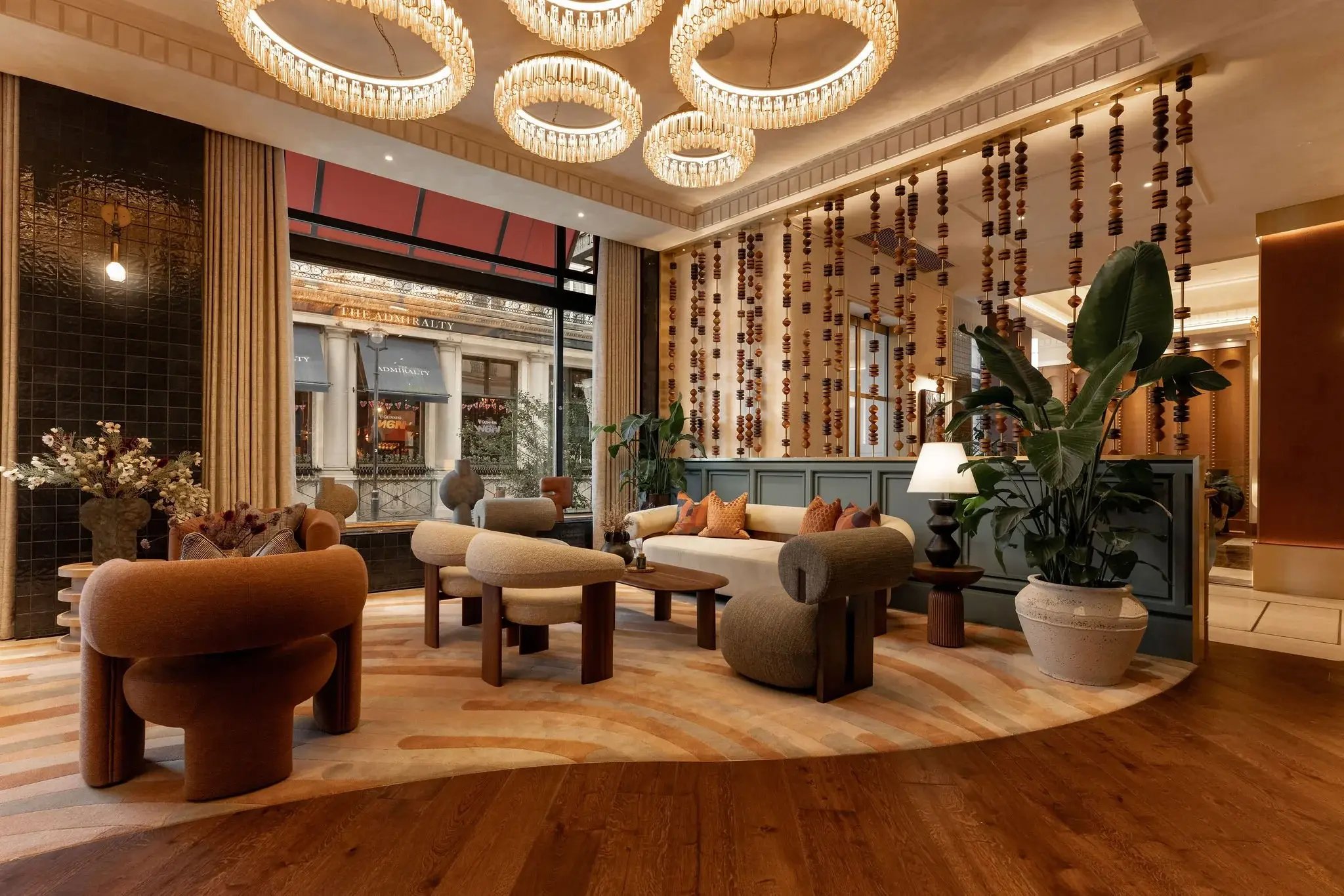
For owners and project teams, that means interior design decisions in 2026 are increasingly about durability, wellness, accessibility, carbon performance, and flexible programming—all while delivering a “premium feel” that supports higher rates.
Below are the most important hospitality interior design trends for Canada in 2026, with practical material and specification guidance (including what typically performs best in Winnipeg’s commercial environment).
1) “Value-Forward Luxury”: Premium Look, Commercial-Grade Performance
With ADR and RevPAR rising in Canada, operators are reinvesting in guest-facing finishes to defend rate and reputation. CoStar+1 In 2026, “luxury” is less about delicate finishes and more about high-performance materials that look elevated and survive heavy turnover.
What this means in practice
-
Flooring: preference shifts to surfaces that photograph well, clean quickly, and resist traffic (LVT, porcelain, high-performance carpet tile in guestrooms/corridors; slip-resistant tile in wet zones).
-
Wall protection: more discreet wall guards, corner protection, and resilient wallcoverings—especially in corridors and back-of-house.
-
Window coverings: emphasis on blackout performance + layered daylight control to support sleep/wellness positioning.
Winnipeg/Manitoba note: Winter grit and salt accelerate wear at entrances and elevator lobbies—designs are increasingly specifying more robust walk-off systems and tighter maintenance-friendly transitions at thresholds.
2) Wellness-Driven Design Becomes a Revenue Feature (Not Just a Spa)
Wellness travel continues to push design: guests want restorative sleep, thermal experiences, and “calm by design” spaces. New York Post+1 At a standards level, global WELL engagement has surpassed 6 billion sq. ft. across nearly 100,000 locations, signaling that “healthy building” strategies are mainstreaming into hospitality. WELL Resource Hub
Design moves showing up in 2026
-
Acoustic comfort: better underlayments, acoustic flooring strategies, and soft-surface zoning to reduce hallway-to-room noise.
-
Sleep-supportive guestrooms: blackout window coverings, glare control, warmer lighting, and simplified night-time wayfinding.
-
Spa-like bathrooms and changing zones: more tactile tile, calmer palettes, and “hotel bathroom as sanctuary” thinking.
3) Flexible Multi-Use Spaces Replace Single-Purpose Rooms
Owners want spaces that earn revenue all day: breakfast becomes co-working; lounges become small-event venues. 2026 commercial furniture and hospitality planning trends emphasize reconfigurable layouts to maximize utilization. MityLite
Specification implications
-
Flooring transitions and patterns are used to “zone” spaces without building walls.
-
Durable, cleanable soft seating and modular furniture drive higher refresh cycles.
-
Window coverings and lighting are designed for multiple modes (daytime work vs evening social).
4) “Invisible Tech”: Digital Convenience Without a Gadget Aesthetic
Guests increasingly expect digital convenience: Hilton trend reporting highlights strong interest in end-to-end online booking and digital room key adoption. Stories From Hilton The design response is to integrate technology cleanly—concealed charging, discreet signage, and less visual clutter.
What to design around
-
Power + data planning at banquettes, lobby seating, and meeting areas.
-
Materials that hide fingerprints and wear in high-touch zones.
-
Cleaner wall and millwork detailing (technology disappears into the architecture).
5) Accessibility Upgrades Move from “Compliance” to “Competitive Advantage”
Accessibility standards are becoming more visible in procurement and built-environment guidance, with federal accessibility work continuing to expand and update built environment priorities. Accessibility Standards Canada In practical terms, hospitality projects are increasingly treating accessible guestrooms and routes as part of the guest experience—not an afterthought.
Design considerations
-
Clear circulation, practical hardware, safer wet-area finishes, and better lighting/contrast.
-
Earlier coordination between interiors, architectural, and MEP to avoid late-stage compromises.
6) Lower-Carbon Interiors: Embodied Carbon and “Zero Carbon” Thinking Enter the Spec
Across Canada, carbon expectations are moving beyond operations to include materials and construction impacts. The Canada Green Building Council’s Zero Carbon Building standards have evolved (including v4 updates), reflecting changing market expectations and increasing attention to embodied carbon. Canada Green Building Council (CAGBC)+1
What’s changing in 2026 hospitality interiors
-
More demand for products with published EPDs (environmental product declarations).
-
Preference for durable materials that reduce replacement frequency (a lifecycle cost and carbon issue).
-
Greater scrutiny of adhesives, indoor air quality, and maintenance chemistry—especially in large portfolios.
7) Experience-Led Aesthetics: “Photogenic” Moments with Practical Materials
Operators still want “Instagrammable” spaces, but the 2026 version is more controlled: fewer fragile statement pieces, more texture and layered lighting to create memorable moments that hold up over time.
Where this shows up
-
Textural tile feature walls at bars and reception.
-
High-performance textiles that read “soft luxury.”
-
Locally grounded palettes and materials that connect to region (especially important for boutique hotels and renovations).
Material & Finish Recommendations for Canadian Hospitality Projects (2026)
If you are planning a renovation or new build in 2026, the following combination tends to perform well across Canadian hospitality properties:
-
Guestrooms: commercial-grade carpet tile or resilient flooring + acoustic strategy + blackout window coverings.
-
Corridors: high-durability surfaces, strong underlayment choices, and wall protection planned early.
-
Lobby/F&B: slip-resistant hard surfaces, zoned patterns, performance upholstery, and flexible furniture layouts.
-
Bathrooms/Spa: porcelain tile, safety-first slip ratings, and lighting designed for comfort and visibility.
Winnipeg and Manitoba: What We Are Seeing Most Often
Manitoba hotel performance data has shown notable rate growth periods compared with other regions (e.g., STR reporting includes provinces seeing strong ADR/RevPAR lifts in 2025). CoStar combined with climate-related wear factors, Winnipeg projects increasingly prioritize:
-
Entrance and corridor durability (salt/grit management)
-
Fast-turn maintenance (cleanability and stain resistance)
-
Window covering performance for winter daylight and sleep quality
FAQs
What is the biggest hospitality interior design trend in Canada for 2026?
A convergence of wellness-focused design (sleep, acoustics, spa-like bathrooms) with durable, value-forward luxury finishes that support higher ADR expectations. CoStar+1
Are sustainable materials becoming mandatory in Canadian hospitality projects?
Not universally “mandatory,” but expectations are rising quickly—especially around embodied carbon transparency and zero-carbon frameworks, which are increasingly reflected in Canadian standards and owner requirements. Canada Green Building Council (CAGBC)+1
How should hotels choose flooring for renovations in 2026?
Prioritize lifecycle value: slip resistance where needed, acoustic comfort, cleanability, repairability, and aesthetics that support brand positioning—especially in corridors, lobbies, and wet areas.
Practical Action Plan for Hospitality Owners and Designers (Next 30 Days)
-
Define performance criteria first: traffic class, slip resistance, acoustic targets, cleanability, and replacement cycle.
-
Align the design to revenue goals: identify 2–3 “high-impact” guest touchpoints (lobby arrival, bathroom, sleep experience).
-
Request sustainability documentation early: EPDs, low-VOC details, and maintenance requirements. Canada Green Building Council (CAGBC)
-
Do a finish mock-up review: lighting + material sample review together (many disappointments are lighting-related).
-
Lock in long-lead items: window coverings, specialty tile, and custom transitions before tender.
Call BMD Materials to speak to an associate today
If you are planning a hotel, restaurant, or hospitality renovation in Winnipeg or anywhere in Canada, BMD Materials can help you specify commercial flooring, tile, and window coverings that meet 2026 design expectations while meeting the durability and lifecycle performance requirements of hospitality operators. Contact our team to review your drawings, finish schedules, and budget targets.
